🚧 Site currently being updated - things may look funny for the time being 🚧
January 2024|Mobile App, Golfing

One Iota Training Library

Equipping golfers with personalized training through data analysis and actionable insights

One Iota Training Library

Company

One Iota Golf Performance

Timeline

August 2023 - November 2023

Role

UX Research & Designer

Status

Shipped

About The Project

This project was completed as part of a senior level interaction design course at Simon Fraser University. The objective was to partner with a local business to analyze the interactions within their products, services, or operations, and to design a technology solution to improve some area of process.

We decided to partner and select One Iota Golf Performance as our client because our group has a strong understanding of the sport.

Launched in 2023, One Iota Performance is a golf analytics platform that provides avid golfers with data-driven insights to analyze and improve their game. Through the desktop and mobile apps, athletes can input data about each round, reflect on their mental and physical performance, and uncover their strengths and weaknesses. With so many golf analytics apps on the market, One Iota aims to differentiate itself by placing equal emphasis on mental and physical performance, encouraging good habit making, and equipping golfers with the tools to make continual progress, one iota at a time.

My Contributions
As a UX Researcher and Designer, I was responsible for conducting online surveys, user interviews, journey mapping, and co-hosted participatory workshops to understand the needs of our target audience. After proposing design interventions to our target audience, we were able to surface insights and come up with a final design solution.
Team and Timeline
The One Iota Training Library project was undertaken as part of a senior-level interaction design course at Simon Fraser University. The goal was to partner with One Iota to refine their user experience and improve retention through targeted design interventions.

Over a three-month period, our team of five UX Researchers and Designers collaborated to address key challenges identified through initial stakeholder meetings.

Research and Insights

Project Initiation and Background Research

The project kicked off with a deep dive into the existing landscape of golf analytics apps. This included an analysis of competitors and market trends to understand what One Iota was up against and to identify gaps in the market. Simultaneously, we reviewed academic literature and existing surveys on golf training to establish a foundation of knowledge about our target users’ habits and preferences.


We employed a mixed-methods approach to gain a holistic understanding of our users. This phase included:

  • Ethnographic Studies: We conducted observational studies and ride-along sessions with golfers during their games. This helped us understand the real-world usage of golf apps and the natural interaction of golfers with technology on the course.

  • User Interviews: Initial interviews were held with a small group of amateur and professional golfers. These sessions helped us to uncover deeper insights into the mental and physical aspects of their training routines, and their perceptions of existing apps, including One Iota.

  • Surveys: An online survey reached 58 participants, providing quantitative data on user preferences, pain points, and feature desirability. This broader insight complemented our in-depth interviews and helped validate the themes we identified.
Synthesizing Research Data

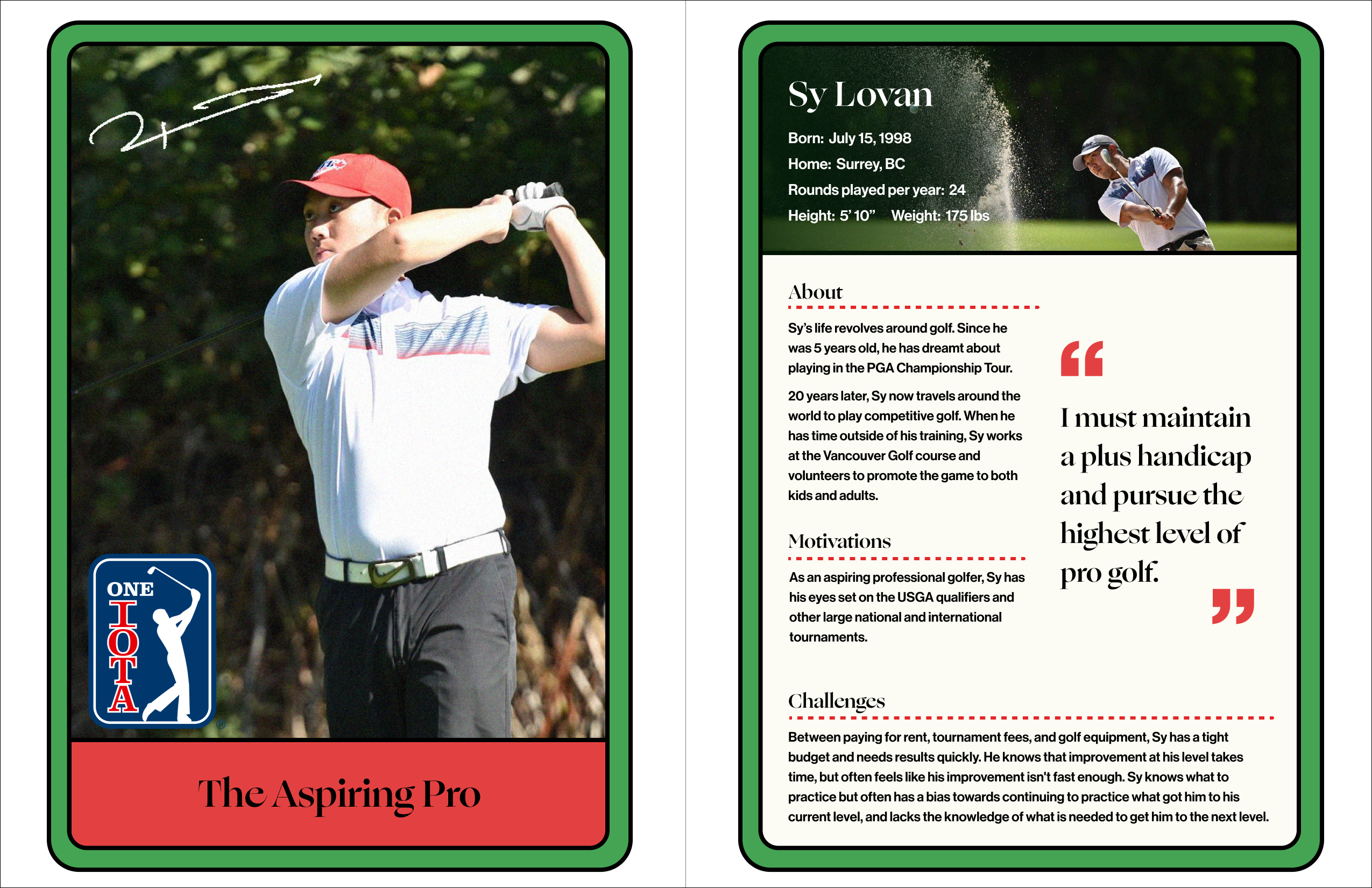
Using the insights gathered, we developed detailed user personas and journey maps. Two main personas emerged: the dedicated amateur and the aspiring professional golfer. Each persona was fleshed out with specific needs, goals, and typical pain points associated with using golf performance apps.

  • Persona Development: The personas helped us categorize the types of users One Iota served and guided our design decisions tailored to each group's unique needs.

  • Journey Mapping: We mapped the typical user journeys for each persona, from initial engagement with the app through to post-round analysis and feedback. This process highlighted several pain points in the onboarding process and ongoing use, guiding our focus towards meaningful improvements.
User Personas
In- Depth Interviews and User Testing
Following the initial round of surveys and interviews, we conducted a second, more targeted set of interviews to dive deeper into specific issues identified earlier. We also began iterative testing of low-fidelity prototypes to gauge reactions to proposed changes and gather feedback on new feature ideas.
Insight Synthesis and Strategy Formation

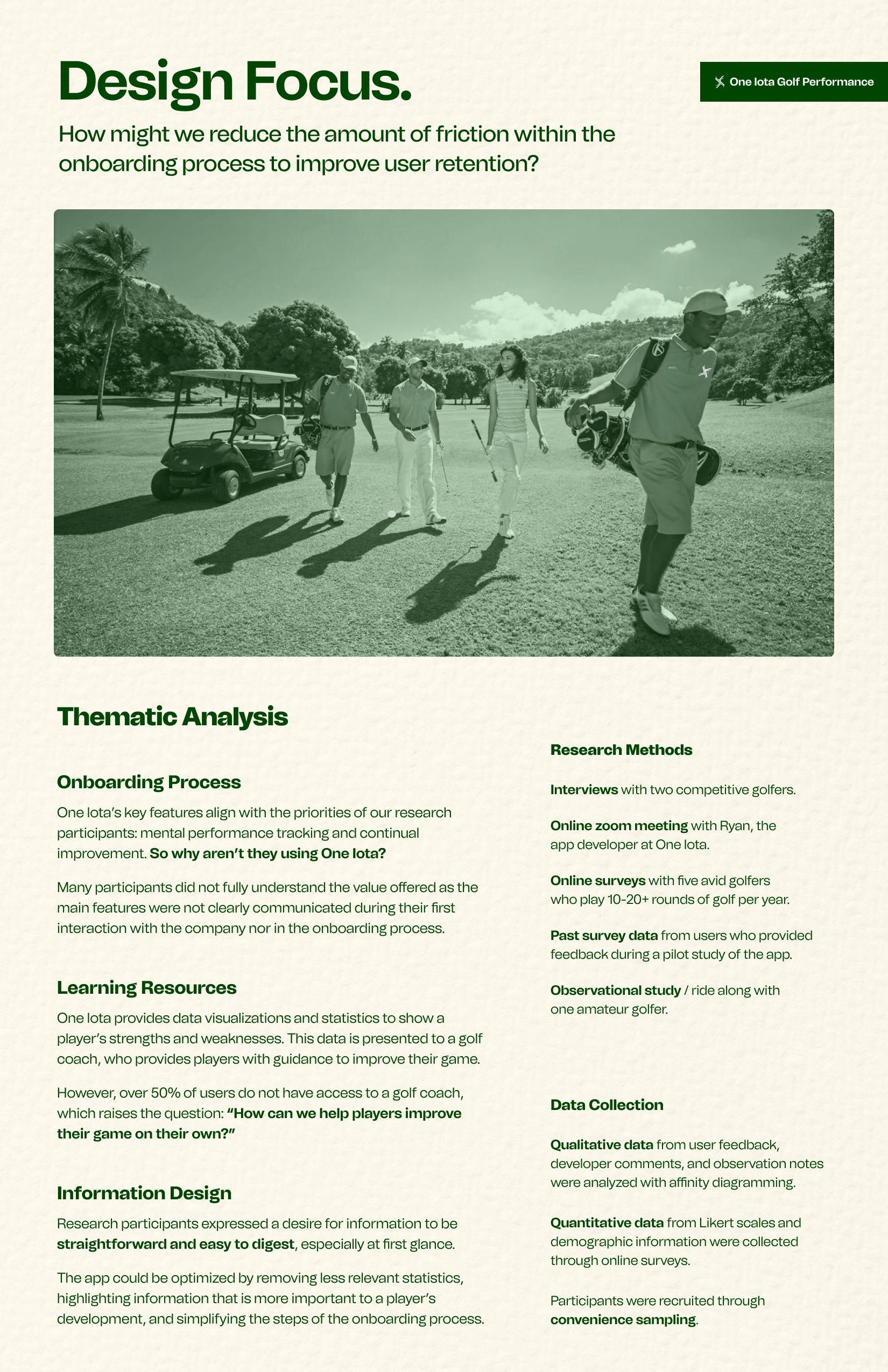
The culmination of our research efforts was a set of actionable insights that directly informed our design strategy. Key findings included:

  • • Mental Performance as a Priority: Many golfers, especially those without coaches, felt underserved by existing apps in mental training support.

  • • Need for Actionable Insights: Users expressed frustration with the overwhelming data and lack of clear action steps in current apps.

  • • Barriers in Onboarding: The onboarding process was often overwhelming, not due to its complexity but because it failed to communicate the app’s value early on.

These insights led to a focused question that would guide our subsequent design phase: How can we streamline the onboarding process to better demonstrate value and engage users from their first interaction?

Concept Ideation
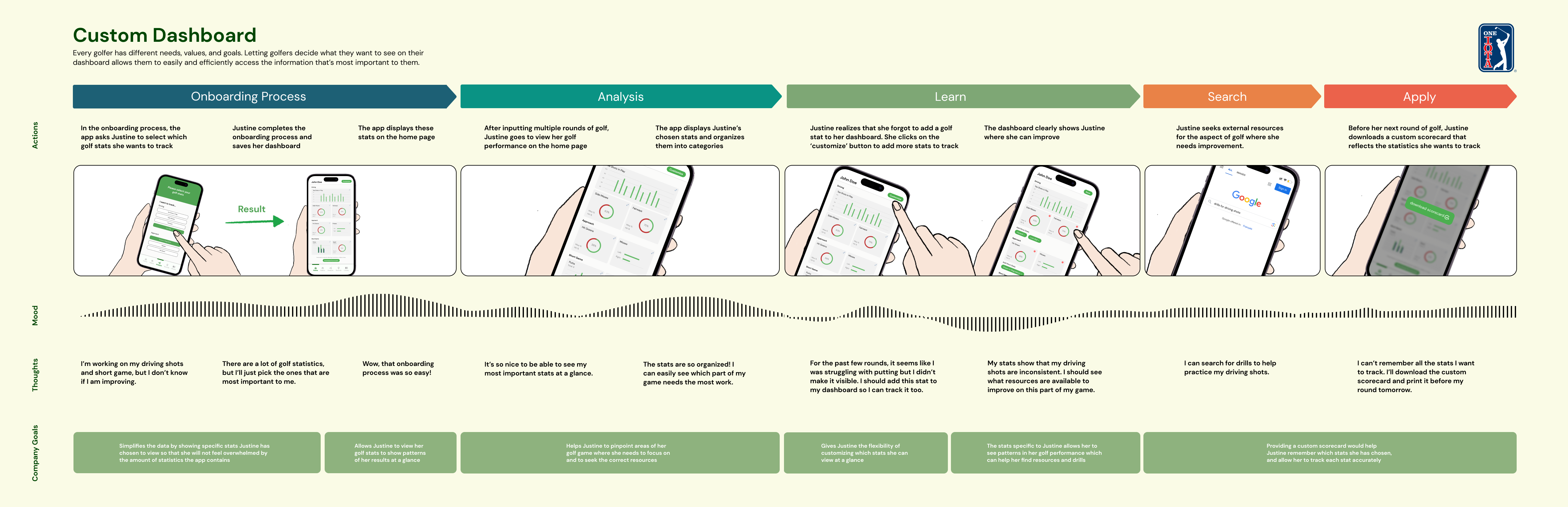
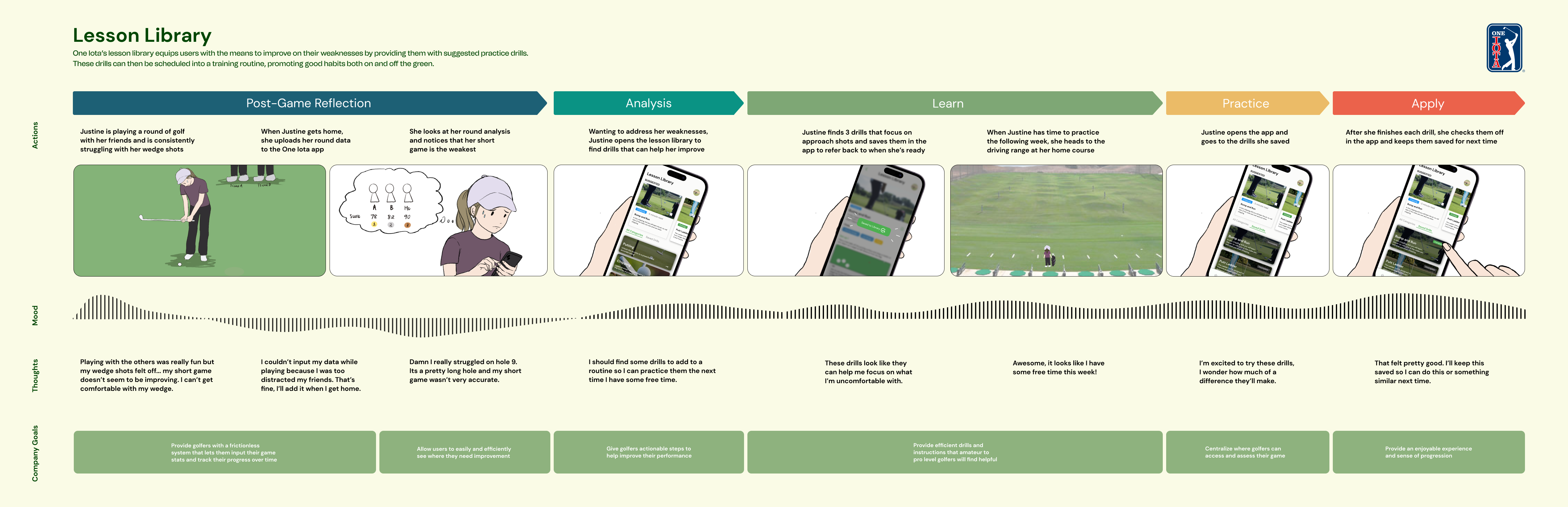
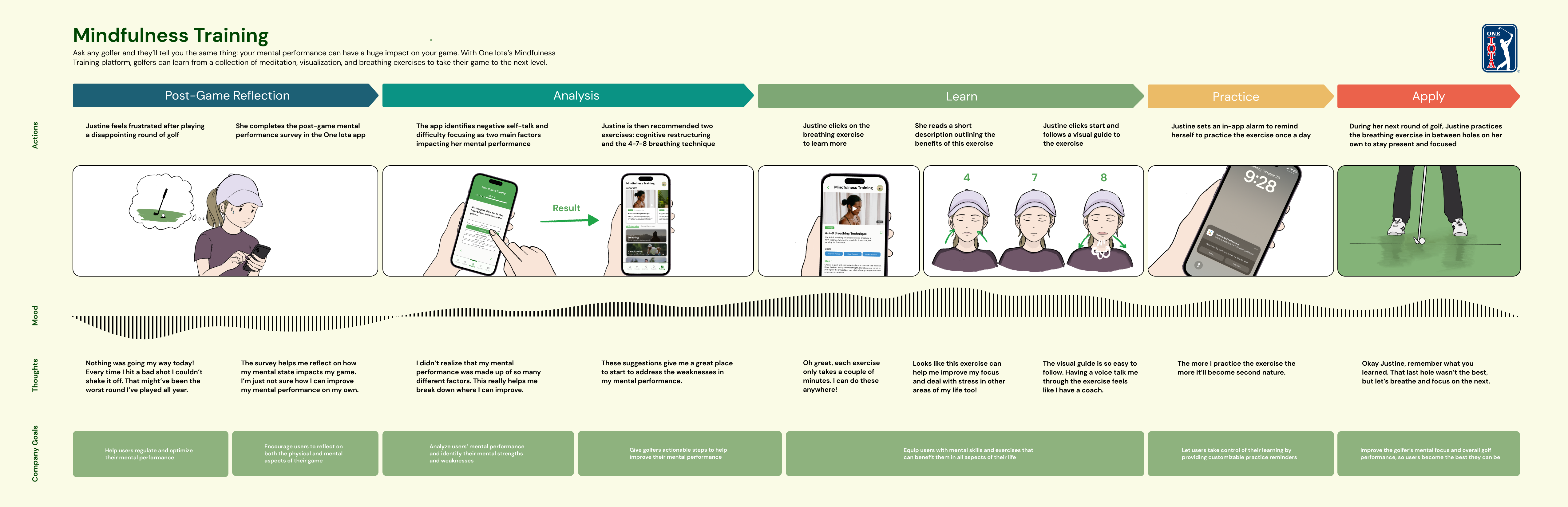
Our team explored three concept directions: a customizable dashboard, a lesson library, and a mindfulness training platform. For each idea, we created a concept poster and storyboard to illustrate the benefits to each persona and its incorporation into their user journeys.
Concept Storyboard

Design Process and Validation

Ideation and Concept Development
Guided by insights from our research, we developed three initial concepts: a customizable dashboard, a lesson library, and a mindfulness training platform. These ideas were refined through iterative feedback and collaborative workshops with stakeholders.

Outcome and Impact

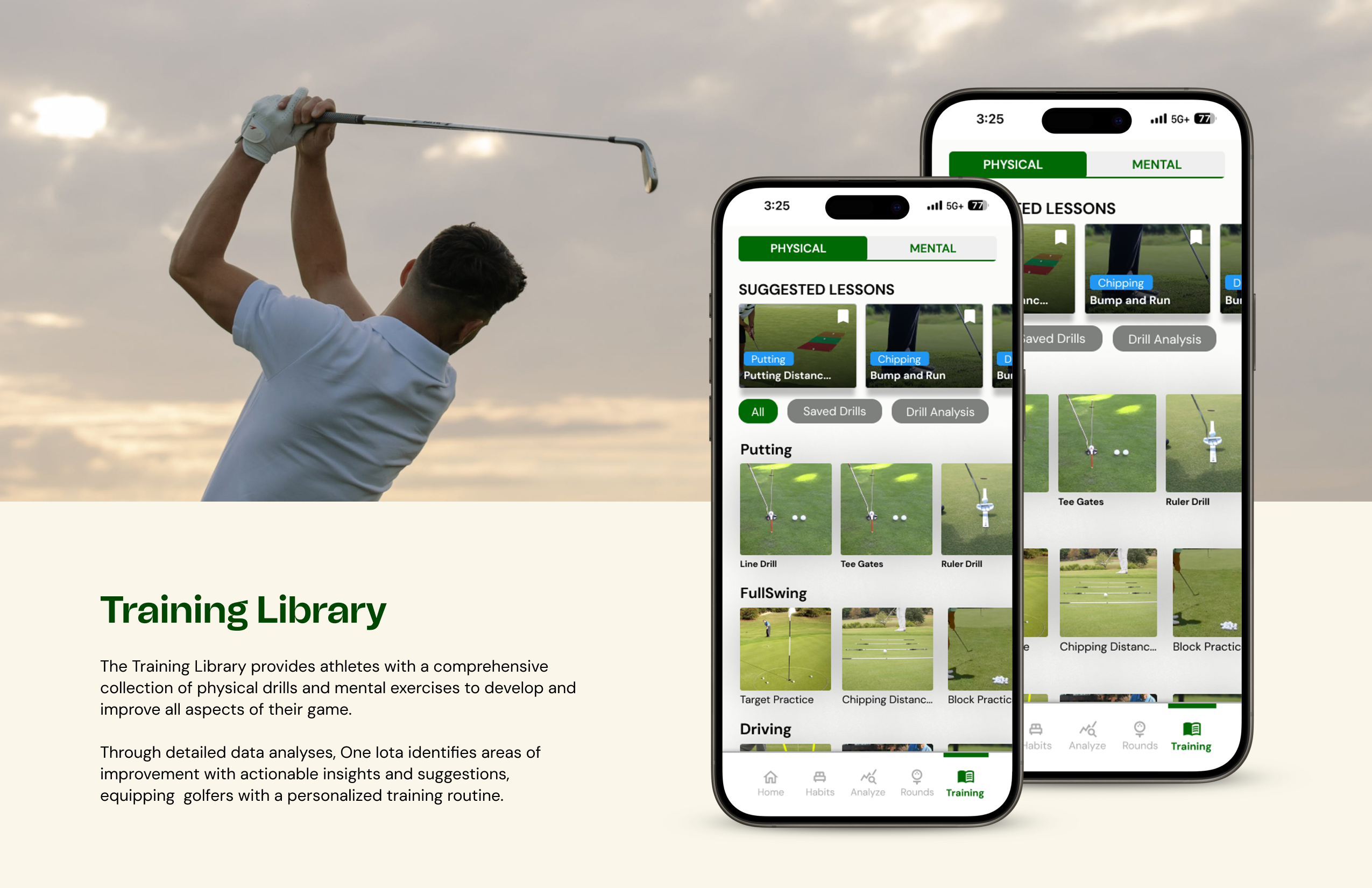
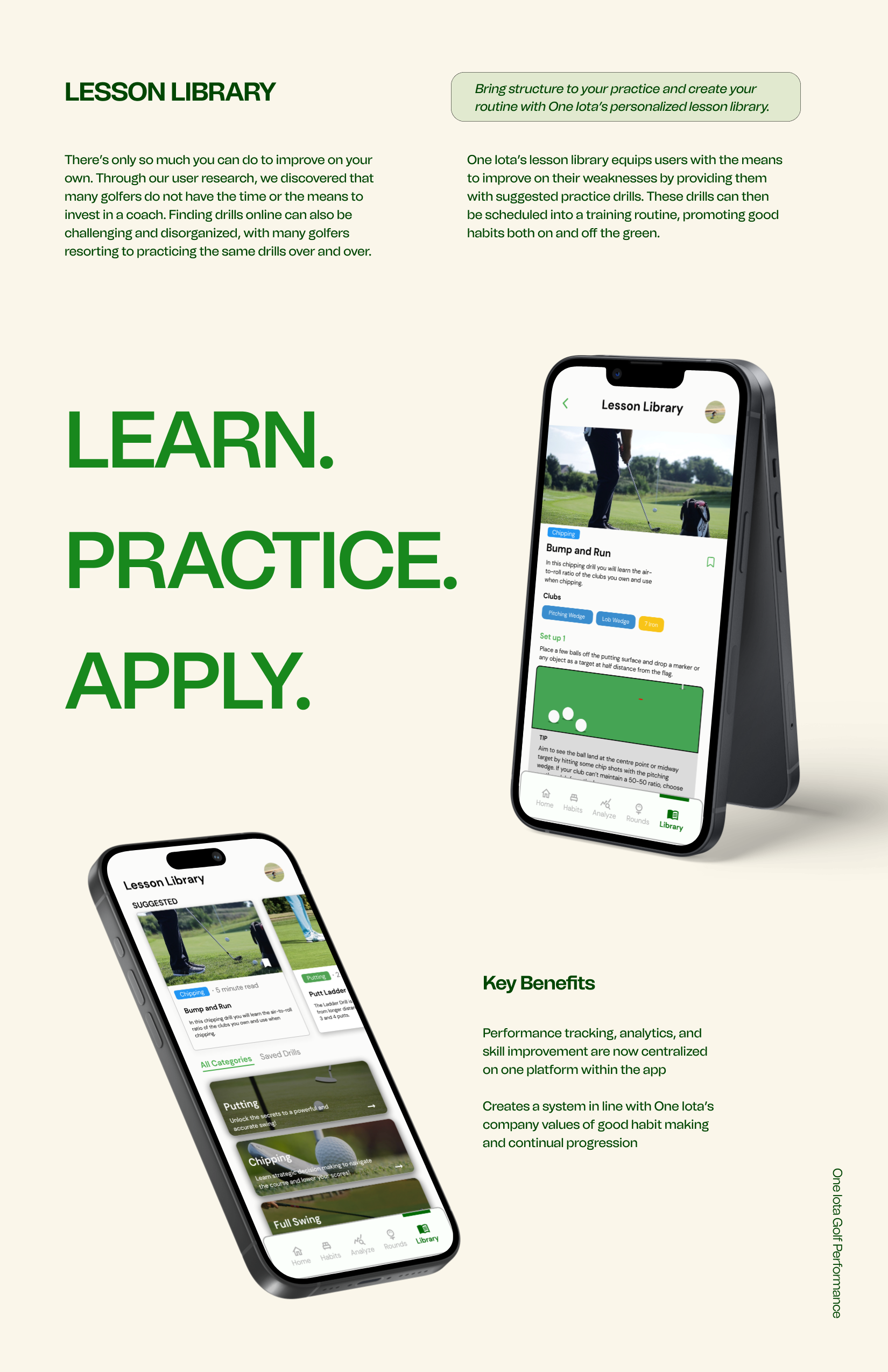
Final Design: The One Iota Training Library
Based on the comprehensive insights gathered through our research and validation activities, our team developed the One Iota Training Library—a robust platform designed to support golfers in enhancing both their mental and physical performance. This solution reflects a deep integration of user feedback, stakeholder input, and design innovation to create a user-centric tool tailored to the specific needs of golf enthusiasts.
Metrics of Success
While the full implementation and quantitative impact measurements are pending, initial feedback from potential users indicated a strong willingness to adopt and pay for the new features.
Concept Video

As part of the final deliverable, we created a product video to illustrate and showcase the key features of the proposed designs.

Conclusion and Reflections

Project Outcomes
The One Iota Training Library project culminated in the successful design of a comprehensive platform that integrates both mental and physical training tools tailored for golfers. This solution addressed the initial project goals by enhancing user engagement through streamlined onboarding and enriched user interaction, which were key areas identified during the research phase. Although full implementation and impact analysis are pending, early feedback from stakeholders and potential users has been overwhelmingly positive, suggesting that the new features will significantly improve user retention and satisfaction.
Reflections on the Design Journey

This project was a profound learning experience in several ways. Firstly, it reinforced the importance of a holistic and empathetic approach to user research. Engaging directly with users not only deepened my understanding of their needs but also highlighted the subtle nuances of how golfers interact with technology in different environments. This understanding was crucial in designing features that are both useful and usable.

Secondly, the iterative nature of this project taught me the value of flexibility in design thinking. Each round of feedback and testing provided new insights that sometimes challenged our initial assumptions and required us to pivot our approach. This adaptability is something I plan to carry forward into all my future projects.

Lessons Learned:

  • • Importance of Cross-Disciplinary Collaboration: Working closely with researchers, designers, and stakeholders from different backgrounds contributed to a richer, more comprehensive understanding of the problem space and more innovative solutions.

  • • User-Centered Design as a Guiding Principle: The project underscored the importance of keeping user needs at the forefront of the design process. This approach not only leads to better products but also ensures that the solutions are aligned with the users' real-world needs and expectations.

  • • Strategic Thinking in Design: Balancing user desires with business goals and technical constraints was challenging but essential. This project improved my ability to think strategically about design, considering not just the user experience but also the feasibility and business impact of design decisions.

The insights and experiences gained from the One Iota project have equipped me with a deeper appreciation for the nuances of UX design in the context of sports technology. Moving forward, I aim to apply these principles more broadly, particularly in projects that require breaking down complex user data into actionable and engaging user interfaces. Additionally, the project has sparked a keen interest in exploring further how digital solutions can enhance physical training across various sports, expanding my horizon beyond golf.

The opportunity to lead and learn from this project was immensely rewarding. It not only affirmed my commitment to a career in UX but also highlighted areas for personal and professional growth. I look forward to bringing these learnings to future roles, where I can continue to advocate for and implement user-centered design practices.